Python Language Tutorial
Python is a powerful high-level programming language. It was developed in 1991 by Guido van Rossum.
One of the main features of Python is its simple syntax and readability,
which allows beginners to learn it quickly.
Using Python, programs can be written in object-oriented, functional,
and procedural styles.
Python is useful for developing small scripts as well as large applications.
It has a wide standard library and strong community support that continuously develops
new frameworks and packages. Today, Python is used in many different fields.
In this lesson, you will learn:
- What is a Programming Language
- Types of Programming Languages
- Features of Python
- Applications of Python
What is a Programming Language?
A programming language is a special language used to give instructions to a computer.
Just as humans need language to communicate with each other,
we need a programming language to communicate with computers.
The language used to communicate with a computer is called a programming language.
Why is a Programming Language Needed?
Computers understand machine language (which consists of 0s and 1s).
It is difficult to give instructions directly in machine language.
Therefore, we use programming languages to provide instructions more easily.
Programming languages are easier for humans to read and write.
They act as a bridge between humans and computers.
Watch Video: What is Programming Language? (In Telugu)
What is a Program?
A collection of instructions is called a program.
A programming language acts as a tool to write programs.
That means we use programming languages to write programs.
For example, below is a program to add two numbers.
Example: The following are the instructions for adding two numbers:

1. Read First Number
2. Store in A
3. Read Second Number
4. Store in B
5. Add A and B
6. Store result in SUM
7. Print SUM

# Instructions in Python
A = int(input("Enter A:"))
B = int(input("Enter B:"))
SUM = A + B
print("Result:", SUM)
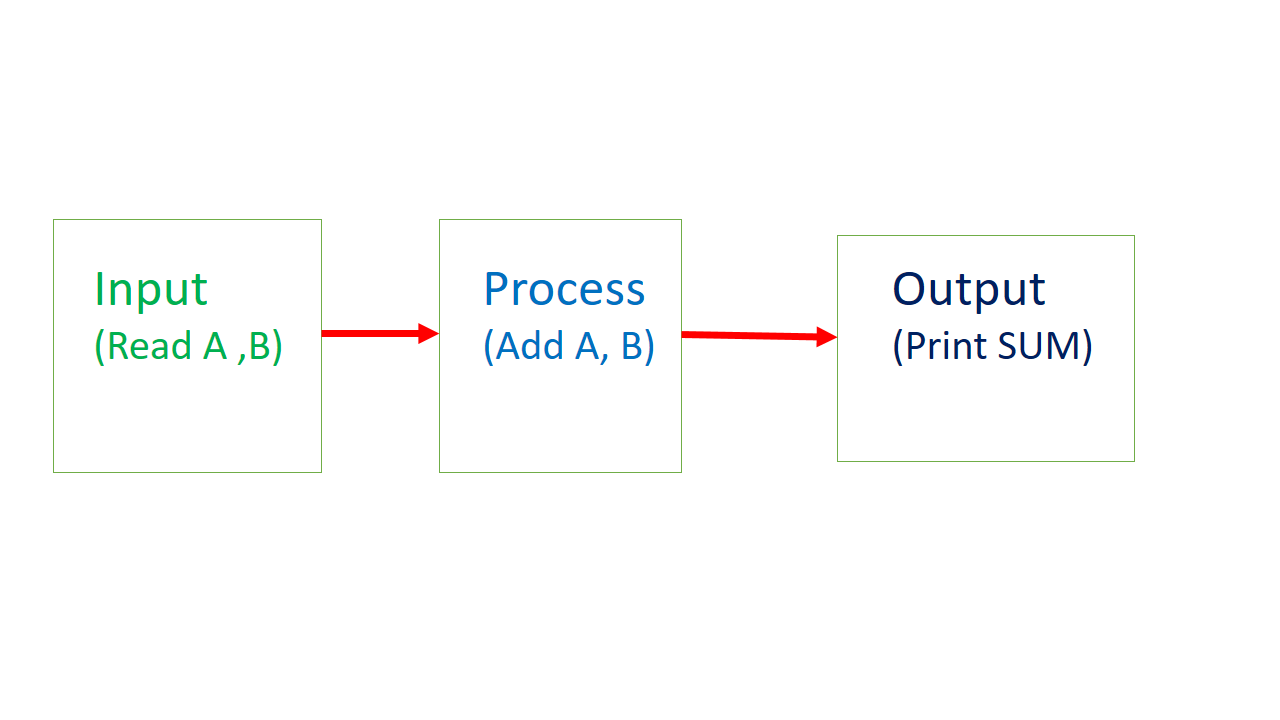
A program takes data as input, processes it, and produces output.
In the above program, A and B are inputs,
the addition operation is the process,
and SUM is the output.
Keywords in Programming Language
In human languages, words have predefined meanings.
Similarly, programming languages also have predefined words.
These are called keywords.
For example, in Python: class, def, if, for.
Identifiers in Programming Language
Apart from keywords, we can create our own names while writing programs.
These names are called identifiers.
name = "Arya"
age = 25
print(name, age)

In the above Python program snippet, name and age are identifiers.
Syntax in Programming Language
Just as human languages have grammar rules to form sentences,
programming languages also have rules to write programs.
These rules are called syntax.
Syntax determines how a program should be written.
For example, in the instruction age = 25,
the identifier name must be written on the left side of "="
and the value must be written on the right side.
Statement in Programming Language
A single line instruction written using keywords and identifiers
following syntax rules is called a statement.
Example: age = 25
Code
The instructions written to give commands to a computer are called code.
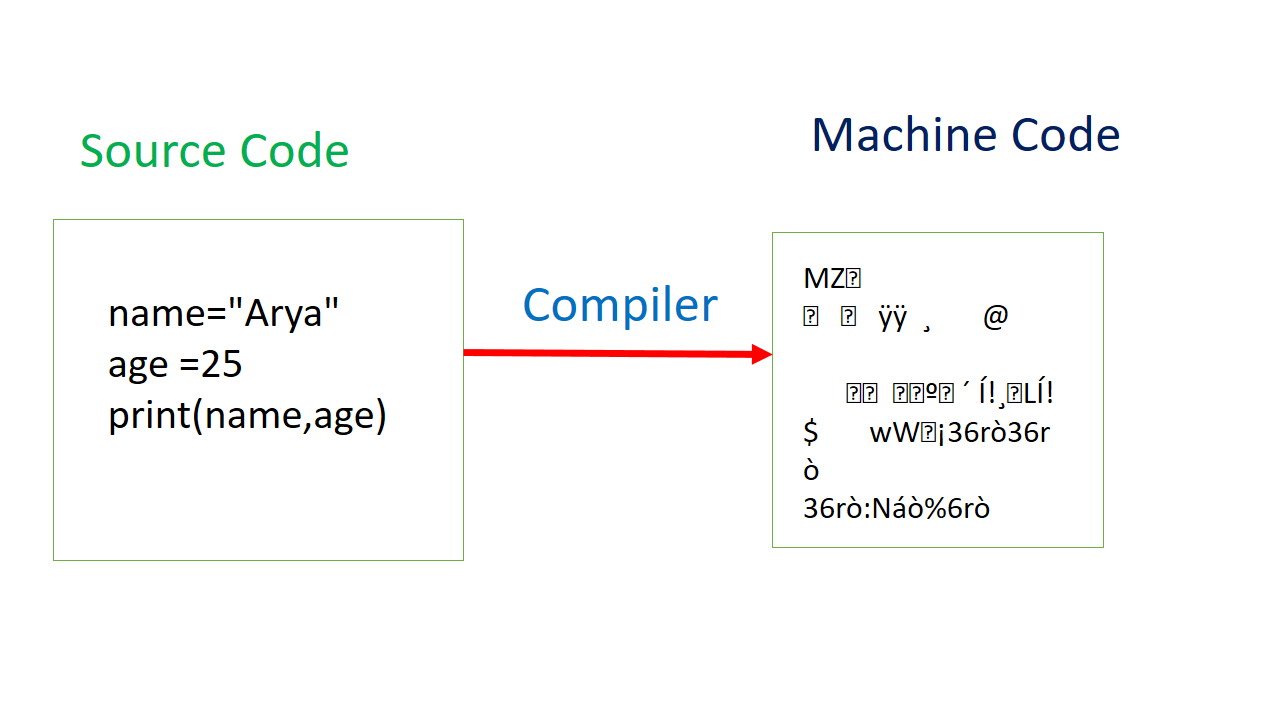
Source Code
The original code written by a programmer is called source code.
name = "Arya"
age = 25
print(name, age)
Machine Code
Machine code is written in binary format (0s and 1s).
In compiled languages, machine code is usually stored in executable files such as .exe.
Compiler
A compiler converts the instructions written in a programming language
into machine language.
It converts the entire program into machine code at once.
If there are syntax errors in the program, it displays a list of mistakes.
The program will compile only after correcting all errors.
Note:
Python is not a fully compiled language.
Python source code is first converted into bytecode,
and then executed by the Python Interpreter.
Watch Video: What is Compiler? (In Telugu)
Interpreter
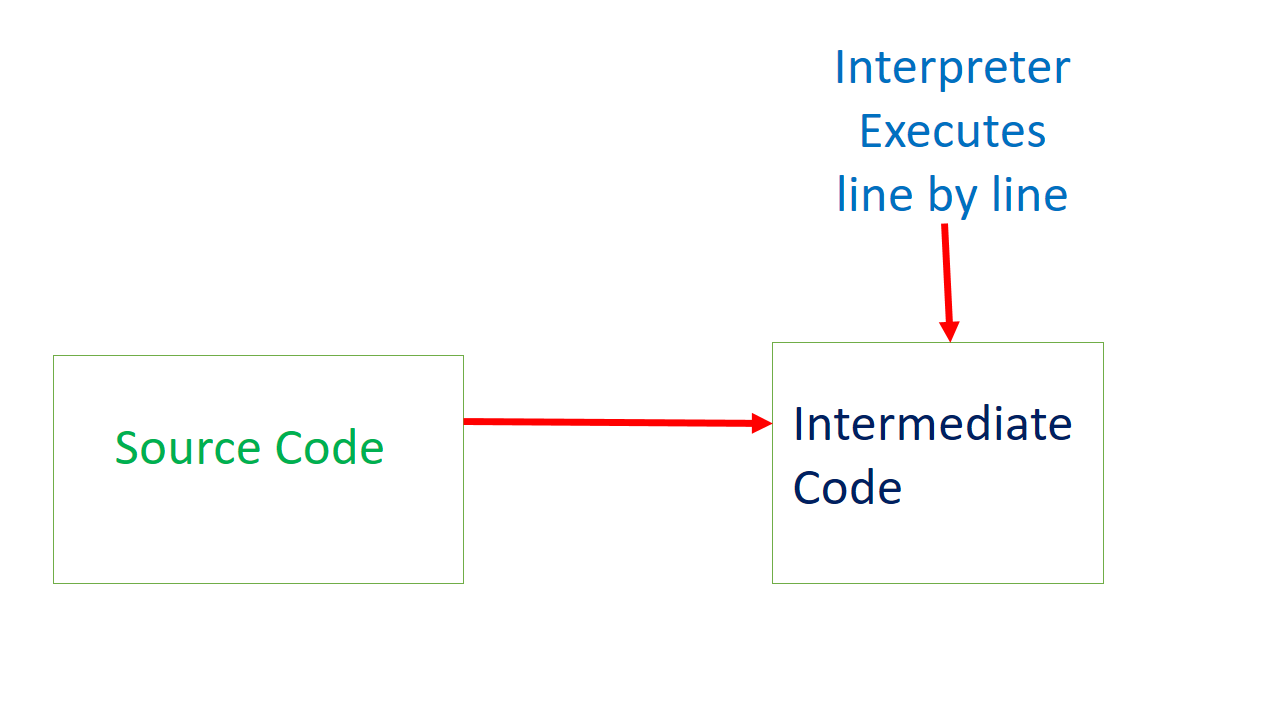
An interpreter does not convert the entire program at once.
It converts and executes the program line by line.
It reads one line, executes it, then moves to the next line
until the program is fully executed.
Types of Programming Languages
Programming languages are classified based on their purpose,
execution method, and readability level.
Machine Level Language
- This is a low-level language.
- Written in machine language (binary).
- Difficult to understand but runs very fast.
Assembly Language
- This is a low-level language.
- Uses symbols like move, store, add.
- Requires an assembler to convert into machine code.
- Easier to understand than machine language.
High-Level Languages
- Easy to learn, write, and understand.
- Require a compiler or interpreter to convert into machine code.
- Examples: C, C++, Java, Python.
Procedural Languages
- Program is divided into functions (procedures).
- Instructions are written in sequential order.
- Data and functions are separate.
- Focus is on what function performs.
- Example: C Language.
Object-Oriented Programming Languages
- Programs are written based on classes and objects.
- Data and functions are combined.
- Focus is on which object is responsible for performing tasks.
- Examples: C++, Java, Python.
Scripting Languages
- Used for automated tasks and controlling other programs.
- Work inside browsers, servers, or operating systems.
- Examples: Python, JavaScript.
Features of Python
-
Simple and Easy to Learn
Python syntax is very simple. Because it is easy to read and write, beginners can learn it quickly. -
Interpreted Language
Python is an interpreted language. That means the code is executed line by line. This makes debugging easier. -
Cross-Platform Compatibility
Python works on different platforms such as Windows, Linux, and MacOS. The same code can run on different systems without modification. -
Object-Oriented Programming (OOP)
Python supports object-oriented programming. Applications can be developed using classes and objects. This helps in maintaining and managing large projects easily. -
Large Standard Library
Python has a very extensive standard library. Using the standard library, tasks such as web development, data processing, and file handling can be performed easily. -
Dynamic Typing
In Python, there is no need to declare data types in advance. The type is determined at runtime. -
Extensible and Embeddable
Python can be combined with other languages such as C and C++. It can also be embedded into other applications. -
High-Level Language
Python is a high-level language. That means the code is human-readable, and the programmer does not need to manage memory or hardware-level details manually. -
Portable
Once written, Python code can run on different systems without making changes. -
Community Support
Python has a large and active developer community that continuously develops new libraries and frameworks.
Applications of Python | Where Python Can Be Used?
-
Web Development
Using frameworks such as Django, Flask, and FastAPI, secure and scalable web applications can be developed. -
Data Science and Analytics
Libraries like NumPy, Pandas, Matplotlib, and Seaborn are used for data analysis, visualization, and big data processing. -
Machine Learning & Artificial Intelligence
Using libraries such as TensorFlow, PyTorch, and Scikit-learn, machine learning models, deep learning networks, and AI applications can be built. -
Automation and Scripting
Python is used to automate repetitive tasks such as file handling, data extraction, and testing. -
Game Development
Small games can be developed using libraries such as Pygame. -
Desktop Applications
GUI-based desktop applications can be developed using frameworks like Tkinter, PyQt, and Kivy. -
Web Scraping
Tools like BeautifulSoup and Scrapy are used to collect data from websites. -
Networking
Using socket programming, network applications such as chat servers and communication tools can be developed. -
Cyber Security
Python is used in penetration testing, malware analysis, and security automation. -
Scientific Computing
Libraries like SciPy and SymPy are used for scientific simulations and mathematical computations.
Python vs C vs Java
| Feature | C | Java | Python |
|---|---|---|---|
| Type | Procedural Language | Object-Oriented Language | Interpreted, Object-Oriented, High-Level Language |
| Performance | Very fast, close to hardware | Moderate speed due to JVM optimization | Slower, but development is much easier |
| Memory Management | Manual (pointers, malloc/free) | Automatic Garbage Collection | Automatic Garbage Collection |
| Platform Dependency | Platform-dependent (compiled for specific OS) | Platform-independent (Write Once, Run Anywhere using JVM) | Platform-independent (runs on interpreter) |
| Syntax | Complex, low-level | Verbose, strongly typed | Simple, readable, beginner-friendly |
| Use Cases | Operating Systems, Embedded Systems, System Programming | Enterprise Applications, Android Apps, Web Servers | AI/ML, Data Science, Automation, Scripting |
| Learning Curve | Difficult (requires understanding hardware concepts) | Moderate (requires understanding OOP concepts) | Easy (high readability and productivity) |
Python Interview Questions
Every Python learner should know the following important interview questions:
-
1. What is Python?
Python is a high-level, interpreted programming language. It has simple syntax and supports object-oriented, procedural, and functional programming styles. -
2. Why is Python called an Interpreted Language?
Python code is executed line by line. The interpreter converts the source code into machine code and executes it immediately. -
3. What is the difference between Compiler and Interpreter?
A compiler translates the entire program at once. An interpreter executes the program line by line. -
4. What are Keywords in Python?
Keywords are reserved words in Python that have special meaning. Examples: if, for, def, class. -
5. What are Identifiers?
Identifiers are the names given to variables, functions, and classes. -
6. What are the Features of Python?
Simple syntax, interpreted nature, dynamic typing, large standard library, and cross-platform compatibility are key features. -
7. Where is Python used?
Python is used in Web Development, Data Science, AI/ML, Automation, Cyber Security, and Scientific Computing. -
8. Is Python Compiled or Interpreted?
Python is mainly an interpreted language, but internally it is compiled into bytecode. -
9. What is PEP 8?
PEP 8 is the official Python coding style guideline document. -
10. Who developed Python?
Python was developed in 1991 by Guido van Rossum.
Frequently Asked Questions (FAQs)
-
Is Python easy to learn?
Yes. Python syntax is simple, which makes it easy for beginners to learn. -
How much time does it take to learn Python?
It may take 1–2 months to learn the basics. Advanced topics depend on practice and consistency. -
Can I get a job after learning Python?
Yes. There are job opportunities in Web Development, Data Science, Automation, and AI. -
Is Python good for beginners?
Yes. Python is one of the most beginner-friendly programming languages. -
Which is better: Python or Java?
For learning simplicity, Python is better. Java is widely used in large enterprise systems. -
Does Python need a compiler?
Python source code is first converted into bytecode. Execution happens through the interpreter. -
Is Python free?
Yes. Python is open-source and available for free download. -
Can Python build websites?
Yes. Powerful web applications can be developed using frameworks like Django, Flask, and FastAPI.
In this lesson, we learned the following:
- Programming Languages
- Features of Python
- Applications of Python
- Installing Python (Step-by-step guide) will be covered in the next topic.